Desert Places

Snow falling and night falling fast oh fast
In a field I looked into going past,
And the ground almost covered smooth in snow,
But a few weeds and stubble showing last. Continue Reading

Desert Places
Snow falling and night falling fast oh fast
In a field I looked into going past,
And the ground almost covered smooth in snow,
But a few weeds and stubble showing last. Continue Reading
Astrology
It’s so clear tonight, and calm,
that if I stepped outside,
and raised my head, I imagine
I could see the silver Continue Reading

Bullet Cluster: Searching for Primordial Antimatter
http://chandra.harvard.edu/photo/2008/bullet/
Yesterday’s reblog of The Science Geek (thesciencegeek.org – bookmark this one!) blog on dark matter, the weird stuff posited to exist otherwise galaxies don’t make sense, and if galaxies don’t make sense, we don’t exist, but we exist so galaxies make sense but they wouldn’t make sense if it weren’t for dark matter…or if it weren’t for something we haven’t considered yet; because there just isn’t enough stuff (matter) in the universe to explain how galaxies actually hold themselves together. Continue Reading
Dark matter interests me – and this is a great post. So there’s this certain something out there, that just has to be there, made up of stuff we can’t understand at all. Amazing how much we know; and how much we don’t.
This post is about dark matter and is the latest in my series on cosmology, the study of the origin and evolution of the Universe as a whole. As readers of my previous posts will recall, dark matter makes up about 27% per cent of the mass of the Universe.
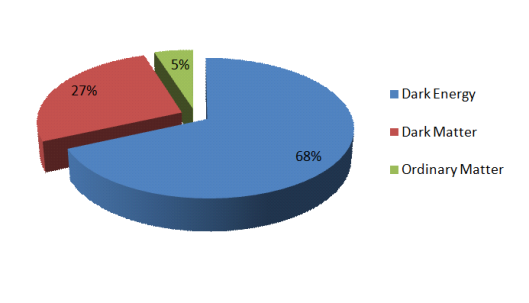
Evidence for dark matter
Our solar system contains the Sun, eight planets with their moons and various minor bodies such as dwarf planets, comets and asteroids. If we plot the speed that each planet orbits the Sun against its distance from the Sun, then we get the curve shown below.
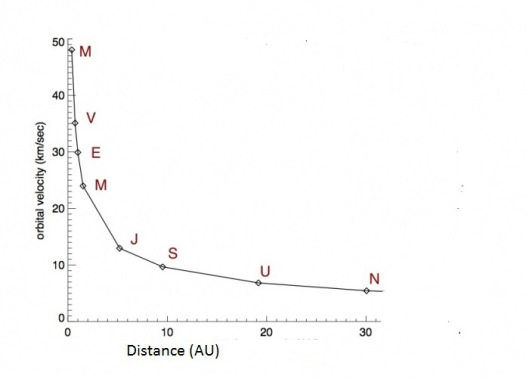
The graph above shows the speed at which the planets orbit the Sun in kilometres per second, plotted against their distance from the Sun in astronomical units (AUs). 1 AU is just under 150 million km and is the average distance between the Earth and the Sun.
The way that the speed of the planets’ orbits falls off with…
View original post 1,439 more words

Heat Death
…the universe might eventually reach a temperature
equilibrium in which… useful energy sources no longer
exist to support life or even motion.
New Grolier Multimedia Encyclopedia Continue Reading
Cosmetics Department

A fragrance heavy as dust; and two young women
motionless as mannequins, dressed in black. Continue Reading

Albrecht Durer: Rhinoceros www.artcyclopedia.com
Yesterday’s post, the second entry of the review of The Art of Botanical Illustration by Wilifrid Blunt, (https://gregole.com/2015/02/19/the-art-of-botanical-illustration-part-2-the-art-of-the-woodcut/) got me to thinking about book production in general right after the invention of movable type by Johannes Gutenberg in 1439, and specifically picture-book production marrying movable type and woodcuts. In hacking around the internet yesterday researching woodcut artists I was stunned by the powerful images this medium is capable. Continue Reading

“Konrad von Megenberg00” by Konrad von Megenberg (1309–1374) – http://sciweb.nybg.org/science2/Onlinexhibits/exhbtcata.html. Licensed under Public Domain via Wikimedia Commons – http://commons.wikimedia.org/wiki/File:Konrad_von_Megenberg00.jpg#mediaviewer/File:Konrad_von_Megenberg00.jpg
Moving from and building upon the naturalism of the late Renaissance, full book-length Herbals with highly realistic botanical illustrations evolved. Propelled by the invention of the movable type printing process in Europe in 1439 coupled with the art of woodcut, book-length Herbals showing reasonably realistic portrayals of plants, flowers, trees, and all manner of things botanical began to make their way into the world. Continue Reading
I’ve been thinking a lot about where Earth’s oceans came from ever since we landed a probe on a comet, comet CG 67P.
http://www.livecometdata.com/comets/67p-churyumov-gerasimenko/
It has been conjectured that comets colliding with early Earth provided the water for the oceans. Continue Reading
 | Justice on The One Mystery |
 | gregole on A Visit to Mount Graham |
 | leocassetti on A Visit to Mount Graham |
| gregole on A Visit to Mount Graham |
 | lbnfr2 on A Visit to Mount Graham |


 Alan Olee Book Report
